Stan Culture – the act of feverishly following a band and defending and promoting them at every conceivable turn – is widespread and has been for a while now. Literally named after the Eminem track of the same name about a dangerously obsessive fan, countless internet pile-ons are present daily, as one fan group goes after another, or one set of Stans go after a celebrity deemed to have slighted their favourite.
Stans themselves will consider what they do as a harmless championing of an artist or act they love. They’ll make super edits, memes, shift tickets and generate huge amounts of content – any different from the devotees of bands that came before social media? However, within these groups, there’s people who will take it too far. They’ll find themselves embroiled in huge, ugly arguments. They’ll mobilise and target people online. Some will read between the lines and look for coded slights and act upon their impulses. They’ve been given names by the artists and marketing companies, from Rihanna’s ‘Navy’, to GaGa’s ‘Little Monsters’.
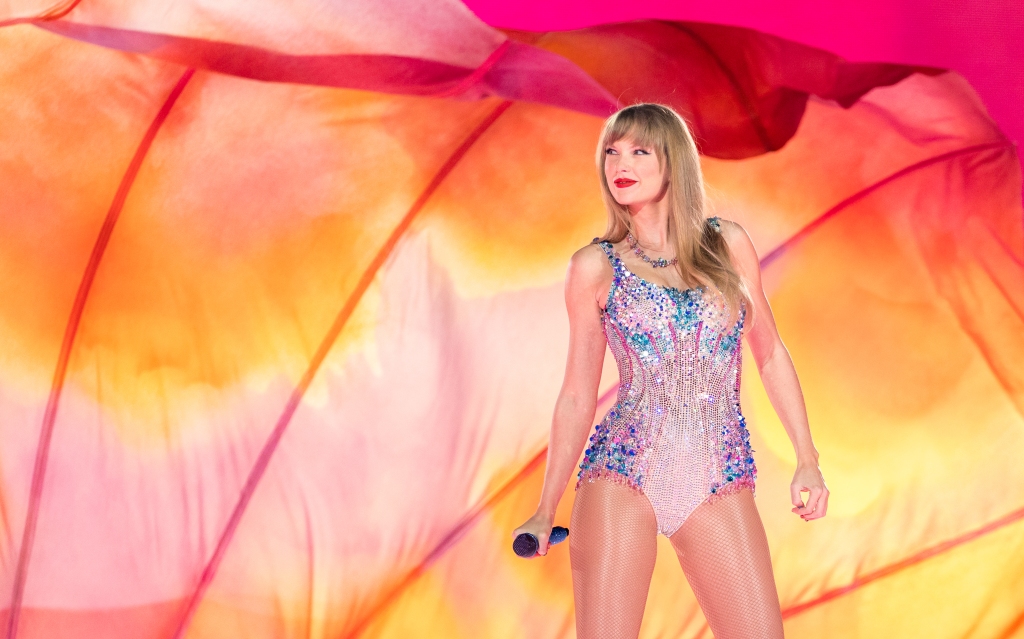
One of the more prominent groups are those that follow megastar Taylor Swift, called ‘Swifties’.
During a show in Minneapolis over the weekend, Swift asked her fans to not cyberbully those they suspect to be referenced in her music and that she didn’t want anyone harassing people on her behalf when she re-releases her 2010 album ‘Speak Now’ next month. For those that have done the digging, fans think that this album contains references to exes of Swift’s, notably John Mayer and Taylor Lautner.
“I was hoping to ask you that as we lead up to this album coming out, I would love for that kindness and that gentleness to extend onto our internet activities,” she told her audience. “I’m putting this album out because I want to own my music, and I believe that any artist who has the desire to own their music should be able to, that’s why I’m putting out this album.”
“I’m 33 years old. I don’t care about anything that happened to me when I was 19 except the songs I wrote and the memories we made together. I’m not putting this album out so that you can go and should feel the need to defend me on the internet against someone you think I might have written a song about 14 billion years ago.”
This is all well and good, but is it far too late to put a thing like this back in the box? Fanaticism is nothing new in music and pop culture, but never before have fans been able to gather en masse like this before, thanks to social media. While the ‘local’ accounts are just sharing stuff they find interesting on the fly, the Stans are hype focused, huge communities united by memes, fervent interest in music, and more.
This feverish interest can boil over, and a number of celebrities have simply walked away from social media thanks to their treatment by some mobilised fandoms. When a group of Stans turn on you, you need patience and an incredibly thick skin to weather the storm. Over in TV Land, Stranger Things Millie Bobby Brown deactivated her Twitter account because of false accusations of homophobic language used by the actor.
Innocuous jokes can blow up and seemingly off-hand comments can turn into full shit-storms. When one blogger suggested what they’d like to see from future releases from Nicki Minaj, her fans (Barbz) took it upon themselves to send death threats and hate mail. Wanna Thompson said: “You have these Stans camped out on Twitter and Instagram with someone else’s face in their profile picture, hurling insults because they can.” Minaj fuelled the response, and Thompson saw people insulting her infant daughter online, and advising in no uncertain terms that she should kill herself.
Beyonce has had her share of trouble too. In an Instagram post on her timeline, it said: “I also want to speak here to the beautiful BeyHiVE. I know your love runs deep but that love has to be given to every human. It will bring no joy to the person you love so much if you spew hate in her name.”
Some older critics look at this type of fandom as if it’s some kind of generational rot, but for the most part, it’s pretty good natured if a little manic. However, it’s churlish to ignore the dark side of this too. In Korea, we’ve seen these super fans tapping popstar’s phones, filming them and breaking into their homes. It might be a leap, but it’s not difficult to think of Mark Chapman murdering John Lennon moments after getting his LP signed by the man himself.
And obviously – and we’ll underline this again – mostly, these groups of fans are good natured and the whole thing is about fun and connecting with other people who love a thing as much as you do. It would be disingenuous to think that there isn’t a problem too, especially given that the artists themselves are trying to dampen the flames of their own fanbase.
For the fans who aren’t invading anyone’s privacy, aren’t aggressive online, don’t obsess, don’t have a complete disregard to anyone deemed an obstacle or critic, it must be infuriating to see anyone bringing up the worst of them to address a broader point. After all, not all sports fans are hooligans and not all uncles are racist. Obsessiveness about celebrity culture doesn’t begin and end with Stan accounts, does it?
Artists can try and control the chaotic behaviour, but you feel that in many instances, it’s too late because they’ve reaped the rewards of such dedicated fans, that by the time they speak, too much has already been allowed to slide. Social media companies themselves don’t help either, with reporting systems all but broken and non functional.
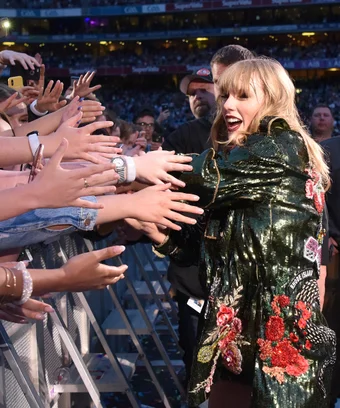
PHOTO: GARETH CATTERMOLE/TAS18/GETTY IMAGES.
Megan Thee Stallion is the artist fuelling the meme that defined summer 2019: hot girl summer. Along with Lil Nas X, she’s one of the breakout stars of the season, thanks to the viral catchphrase she coined herself and a subsequent hit song of the same name featuring her new friend Nicki Minaj. Megan’s an innovator for another reason, too: She’s holding her fans, who she calls Hotties, accountable for their behaviour and encouraging a positive fandom.
In a climate where fans and stans make the news cycle largely for bullying, when they attack en masse after beefs, slights, insults, bad reviews, or any disparagement of their favourite artist, encouraging positivity and diplomacy should be top of mind for anyone with a big microphone and a lot of followers. Online bullying has serious real-life consequences. According to the U.S. Department of Health & Human Services, the effects of bullying can include depression, anxiety, increased feelings of sadness and loneliness, changes in sleep or eating patterns, and health complaints.
“Drama is never going to end, because we’re human. But we don’t have to feed it. When drama escalates, it becomes bullying and harassment,” Kortney Peagram, Ph.D. and part of an anti-bullying team that run programs in schools, told Refinery29. Speaking about Megan Thee Stallion and her ‘Hotties’, she says: “Megan has strong boundaries. She’s not doing so much work that takes up her time, she’s just saying, that was out of line, stop. She’s an incredible example, setting the groundwork for respecting other people and herself.”
We don’t know what the solution to a societal problem is, but all we can hope for is that we don’t end up with another Mark Chapman, or an Eminem track coming to a grisly reality. It seems that, one of the more realistic options is for artists to have a unified voice on this matter, by telling all fans that you’re not supporting an artist by attacking another. If someone’s intentions get screwed up, then it’s down to the artists and their teams to at least try and offer a way out.
 The Pop Corporation
Leave a comment