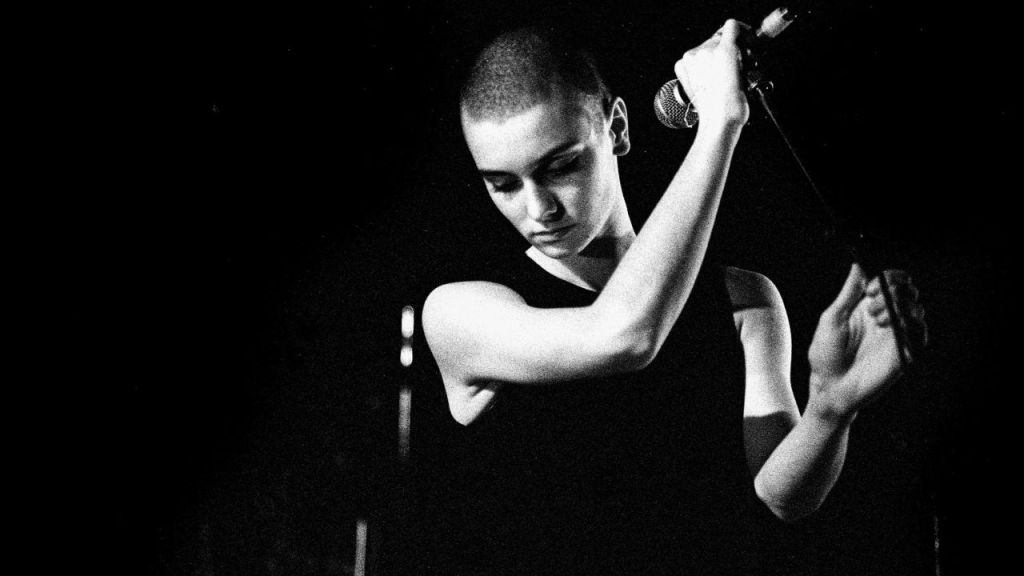
Sinéad O’Connor has died aged 56. It’s strange to write about her passing as, like many music fans, we’ve spent a good amount of time worrying about. While O’Connor showed incredible strength for much of her life, it was obvious there were breaking points and, to be perfectly honest, much of the music press that is now lowering their flags to her, were as responsible as any other faction of the media for the incredible duress she found herself in, for daring to speak her truths.
Obviously, Sinéad was an incredible musician and conveyed powerful emotion that is largely unmatched, but equally important as her creative work was her fearless ability to take pillars of power to task. It would be churlish to ignore the political ying to her musical yang. Often bloodied and battered by her sheer bloodymindedness, for people who had a massive respect of O’Connor, this was all part of what made her so magnetic. And yet, at the same time, it always felt like she was doing it on her own, in part, single-minded, but how we all worried for her safety.
Incomparable barely does her justice.
O’Connor’s family confirmed the news in a statement to RTE: “It is with great sadness that we announce the passing of our beloved Sinéad. Her family and friends are devastated and have requested privacy at this very difficult time.”
It’s been an incredibly difficult period for Sinéad in recent years, which we won’t pore over, but most recently, she updated everyone with the troubling news that she was living alone in a Travelodge in New Jersey: “I’m all by myself, there’s absolutely nobody in my life.”
Through her years, she was a provocative force, and deeply principled. The list is long, but to us, there’s two notable moments where she became legendary.
Of course, there’s the SNL incident where she famously tore up a photograph of Pope John Paul II. It’s been written about extensively elsewhere, but it’s as clear as day that anyone with any semblance of intelligence that her refusal to worship idols, and to highlight the abuse that had been covered up by the Catholic church was 100% correct.
The second moment is worth closer inspection, where in the aftermath of the fury – in part encouraged by a conveniently Catholic Madonna who savaged her during this time, in a bid to help the promotion for her Sex book – Sinéad performed at Madison Square Garden at a Bob Dylan tribute show with Kris Kristofferson, to sing ‘I Believe In You’. The audience turned on her with deafening jeers, to which Kristofferson told her to not “let the bastards get you down”, to which, in the most Sinéad O’Connor response you can imagine, she replied “I’m not down.”
The noise from the American audience was so loud that the song was stopped, her microphone turned louder, and she bellowed over the audience with an improvised rendition of ‘War’, stopping just after the mention of child abuse, rocketing the point home, staring the audience down, before being overwhelmed.
n her 2021 book Rememberings, O’Connor said of the whole thing: “Everyone wants a pop star, see? But I am a protest singer. I just had stuff to get off my chest. I had no desire for fame.”
Fame, notoriety, whatever – Sinéad’s musical legacy is huge and sprawling. Sure, ‘Nothing Compares 2 U’ remains a gargantuan reading of someone else’s song that, while you’re listening to it, feels like it makes time stand still – but there’s so much more to her back catalogue than that.
On the huge ‘Universal Mother’, the hippies, the rock kids, the dance heads were all drawn to a gem of an album. Throughout Sinéad’s music from the ’80s onwards, you can hear where other singers have cribbed notes. When O’Connor cries loudly in pain, you can hear that Björk was listening. Her love of rock, folk and dub, it’s obvious that those under the trip-hop umbrella were pricking their ears up (she’d later work with Massive Attack).
She hopped around genres taking herself where she felt most real, and during the ’80s, she was a rock sensation hitting the charts, playing the festivals, getting college radio play in the States, did the talkshows and was one of the first people to feature a guest rapper (‘I Want Your Hands On Me’) featuring MC Lyte on the cover of the single in equal sized typeface, given equal billing.
She worked with Public Enemy’s ‘The Bomb Squad’, contributed to AIDS charities publicly, saw Frank Sinatra saying he wanted to “kick her ass” for her views, worked with Pink Floyd, Peter Gabriel, worked in movies, collaborated with Terry Hall, Bomb The Bass, Mary J Blige, and so many more. She had an incredible, rich and varied career stacked with some of the best talent the world could offer, herself included.
And what is so criminally overlooked in favour of tabloid coverage, is just how pants-down funny Sinéad O’Connor could be. In one of her announcements of retirement, she said: “I’ve gotten older and I’m tired. So it’s time for me to hang up my nipple tassels, having truly given my all.” When asked about why she sported a shaved head, she said someone had mistaken her for Enya, so she buzzed it off.
She changed her name to Magda Davitt, as she wanted to free herself of the baggage of the past, before converting to Islam, this time taking the name Shuhada Sadaqat.
The news of her passing is a tough one to take, and some big-hitters came to speak of her impact. ANOHNI said: “I can’t think of an artist who’s given more than Sinéad and I can’t think of an artist who’s been punished more than Sinéad, for telling the truth.”
Massive Attack, added: “Devastated. How do you eulogise someone that you never knew well, but were blessed to have the honour of working with. Honestly. To bear witness to her voice, intimately in the studio. On the road every single person stopped—dropped their tools during soundcheck. The fire in her eyes made you understand that her activism was a soulful reflex and not a political gesture.”
While many outlets will look mainly toward her tumultuous life, it’s important to remember and revive her music and the things she stood for. Perfect she wasn’t, but then, Sinéad didn’t claim to be. And that’s what made her such a vital presence in the world and everything is a little dimmer in her absence. If only we could have collectively let her feel that, while she was alive.
She spoke candidly about her struggles with her mental health, and suffered terribly in her personal life. Fiona Apple recently sent O’Connor a tremendously emotional video message that said: “I want you to know that you are my hero.”
She was generous to a fault and perhaps that was a major factor in why we’re now seeing this huge outpouring of love for her. She said in an interview: “I deserve to be respected just as an artist… not overshrouded by a lot of rubbish.”
Let’s at least grant her that, because we won’t see her like again, and that’s a real pity.
 The Pop Corporation
Leave a comment