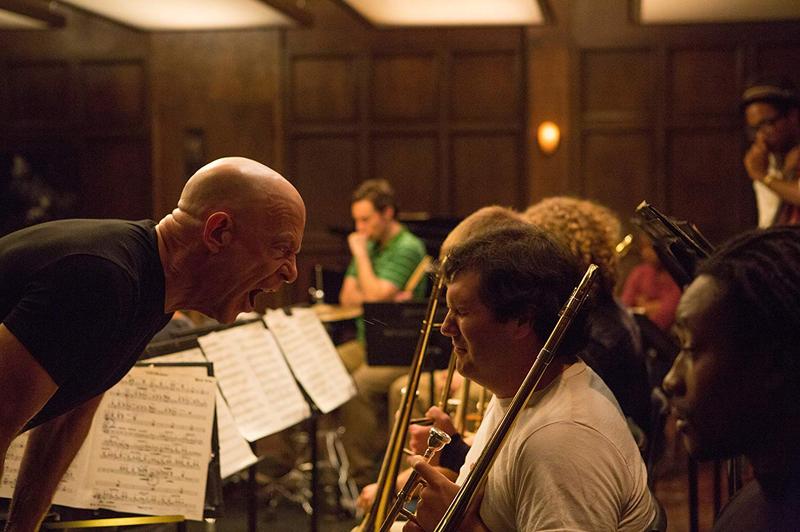
This academic year, there’s been a bit of troubling news. In terms of taking A-Level music as a subject, we’ve seen a record low, with only 5,493 out of 800,000 pupils choosing it as an option.
Since 2010, that’s a 45% drop across the UK. What is the cause of this? What needs to be done? Let’s have a look at this, broadly and anecdotally.
Chief exec of the Independent Society of Musicians (ISM) said: “The evidence is now overwhelming that the government needs to reform accountability measures in England which are marginalising arts subjects in our schools. All students deserve access to high-quality music education”.
One reason, you could argue, is that in financially difficult times, students and parents may be looking at subject that feel more like guaranteed incoming when it comes to entering the job market. It’s also clear that the current government aren’t great when it comes to encouraging young people to choose creative outlets in education.
Reports have shown that some schools simply don’t have music A-Levels as an option, despite their wishes to. The ISM’s report Music: A Subject in Peril? looked at the state of music as further education. One of the problems with music as further education, is it’s ability to recruit kids from less well-off backgrounds, and that’s something that’s been an issue for years. The education authorities know that, the kids know that, successive governments have known that… and why is that?
Is it just the prohibitively expensive equipment at fault? You can loan as many bassoons out as you like, but the rot lies elsewhere.
It’s pretty obvious that musically gifted children aren’t necessarily going to want to join a school orchestra because, well, it’s tragically uncool. Buying a guitar and doing some lousy cover versions in a damp rehearsal room is still more fun than learning Disney themes as part of the many cogs of a small orchestra where you can’t drink cans on the sly and they make you wear formal shoes.
A common complaint is the way in which music is taught in the first place – still chronically Eurocentric in scale, and in many instances, a syllabus that is geared toward formal training, rather than creative expression. It’s not the teachers’ fault, and if it is, it’s because it attracts a kind of musician who has benefit from formal learning, rather than playing for the fuck of it.
And there’s a gnawing sense that efforts to try and improve music education has been tinkering with the periphery, rather than taking a step back and looking at what is going on exactly. It’s obvious that young people want to make music and the UK has invariably never seen such diversity when it comes to production and composition. Adults absolutely want to encourage them too.
It obvious that young people need to feel empowered in their choices with formal music education, but at the same time, teachers also need that creative freedom and stability to make lessons more enjoyable and relevant for young ears, as well as their own sanity, you’d wager. Sure, Bach may well be the building blocks of pop music or whatever, but if classrooms were allowed more freedom to see the impact of influences first, rather than listening to dry, alien music from hundreds of years ago, they might take more note.
It seems that music education is currently in a place where neither the student nor the teacher is implicitly trusted, and that’s always going to make the subject suffer.
There’ll always be the crowd that think learning music is a waste of time, but anyone who has ever played music with other people will know that it’s not just about tuning up and learning your lines. Like many school subjects, the benefits are often picked up by osmosis. Critical thinking, problem solving, becoming a social animal, empathy, teamwork, analytical skills and so many other things are picked up simply by working something out.
To chide music as useless is to ignore that much of what we learn is apparently ‘useless’ too. Not many people needed their knowledge of some Romantic poet, algebra, pyroclastic flow, covalent bonds rudimentary German, how WWI began or whatever in their everyday life – but nothing is wasted, and while it may feel these things aren’t practically useful, we wouldn’t advise that children don’t learn about English, Maths, the planet we live on, science, other languages, our history and the rest, right? Within all subjects, we learn more than what we’re simply taught, and many of the skills are transferrable.
That said, if music as a subject is failing, do we need to look at whether or not a successful musician needs to learn sheet music to be regarded a success? Is theory based teaching the only route to good grades?
The potential for students to look at themselves differently through creative expression is something that a syllabus could focus on more and change their lives for the better. That’s because we know the arts enrich our lives and without music, everything would be substantially more grey (even down to jingles, lift music, incidental music and foley work, ice cream van chimes and the rest – it’s not all about writing pop hits).
It feels like there’s too little in the way of play (as in, recreation) in music teaching, and the reasons for that are varied and in some cases, obvious (funding, teacher confidence, a lack of resources). However, the way teaching is weighted toward written analysis is definitely something that makes the idea of music in further education such a drag.
If a pupil’s own tastes and interests aren’t taken into consideration, then everyone’s missing out. If a music teacher can’t see the value in what they’re hearing from their pupils, then they’re not going to open up the fabulous world of creating music to them, are they?
It’s a significantly missed opportunity.
Obviously, no-one is suggesting that it all goes School Of Rock and we just take the brakes off and everyone starts learning AC/DC for local talent shows. However, handcuffing teachers to be narrow-specialists is surely only going to see more and more kids looking elsewhere for their musical education, especially when you’ve got the incredibly engaging YouTube theorists like Adam Neely breaking down pop songs with the same reverence as jazz standards and noting the “spicy” chords in classic which translate into modern music seamlessly.
In the very interesting Paul Hamlyn Foundation essay, one teacher is quoted as saying: “There is a fundamental problem of music in schools – which is that they try to treat it as a school (academic) rather than a life subject.”
In addition to that, a broader, more inclusive notion of what constitutes acceptable musical influence. While there’s a lack of connection between young people’s musical lives and what they are to learn in the classroom, it’s hard to make an argument that the current form of music teaching is a niche interest, like golf or brass rubbing.
The government’s official line on the music curriculum is: “Music is a universal language that embodies one of the highest forms of creativity. A high-quality music education should engage and inspire pupils to develop a love of music and their talent as musicians, and so increase their self-confidence, creativity and sense of achievement. As pupils progress, they should develop a critical engagement with music, allowing them to compose, and to listen with discrimination to the best in the musical canon.“
Very noble, but if the aim is to simply learn other people’s music to then get a career where you continue to play other people’s music – while that’s fine for some, it’s missing out on the very thing that the vast majority of music-makers are interested in. Do you need to painstakingly go through all the various scales before you’re allowed to do some proper composition? It seems arse-about-face, honestly, making music more like a Sudoku than an expressive form which can later be refined once the passion to create is in the belly.
It’s a huge, complicated issue that won’t be solved by anecdotal asides and idealism, but it’s obvious that music education is in dire need of something, because music’s biggest successes aren’t championing the education system, because frankly, it played almost no part in many of your favourite songs.
 The Pop Corporation
Leave a comment