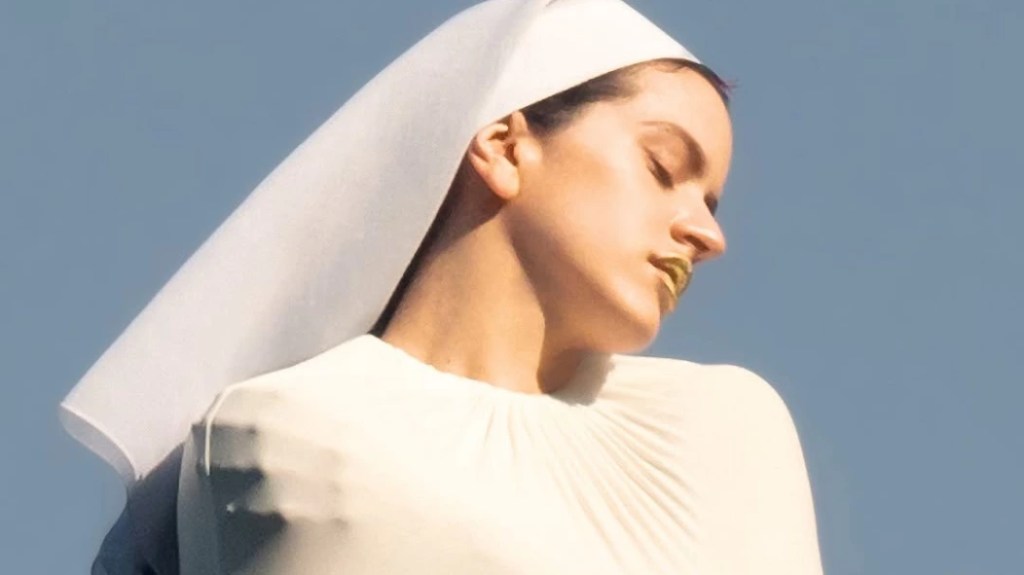
There’s a lot of talk about the volume of languages and how much of a 180 ‘Lux’ is compared to Rosalia’s last LP, ‘MOTOMAMI’, so we’re going to swerve all that and just look at it for what it is, what it sounds like, and how it makes us feel.
Of course, context is important in any album release, but honestly, while this album may not be what we expected per se, anyone who has followed Rosalia’s career from the beginning knows that she’s a restless musician who likes to rip up the form book and throw herself into something new when it comes.
With that, we shouldn’t be surprised that ‘Lux’ is not a pop or reggaeton album – because Rosalia is not your average pop star.
For starters, she’s 33 years old now and she’s clearly looking at making something worthwhile. Sure, there’s been fashion and gossip columns in the interim, but Rosalia is all about throwing herself into her art, from the mangling of traditional Spanish music on her debut, to the leftfield version of reggaeton on her last – nothing to date has been straightforward, and all the better for it frankly.
A lot of big ticket artists have found themselves aching to be relatable and easy to digest in a crowded musical field, and the thing about Rosalia is that she’s not really signed-up for that line of thinking. She’s unusual – a one-off. While Taylor Swift seemingly tries to position herself into some WWE villain era, Bad Bunny took his music home, and Beyonce plots to ruffle some rock ‘n’ roll feathers, Rosalia is finding other avenues that interest her and ultimately, stop her fans from the endless scrolling and tackle something much bigger and more idiosyncratic.
In a recent interview, she noted how Kate Bush managed to make music that was pop, but thought of as being somewhat above it, and Bjork’s appearance on lead single ‘Berghain’ was a statement of intent too.
On ‘Lux’, Rosalia’s biggest collaborations are a symphony orchestra and the towering drama of Catholicism. The result is bombastic, emotional and, dare we say, a little operatic camp in there too (complimentary).
That said, it’s not that this doesn’t have ear-wormy moments. There’s the flamenco handclaps of Spanish folk music and tender ballads which are backed by pastoral strings, and even nods (acoustically) to dembow rhythms – to posit the idea that this is a ‘classical’ album seems a little far-fetched. It’s Baroque Pop in places – it has echoes of ‘Homogenic’, combining glitch with the huge washes of strings. There’s nothing unmodern about the excellent ‘Porcelana’.
The one thing you’re left with is that this whole thing feels incredibly raw, emotionally speaking, and that there’s something very encouraging about someone in Rosalia’s position making an album that is resolutely human, and that isn’t at all buoyed by the notion of algorithms and focus groups. Sure, she could have hit 30 million-odd streams with a reggaeton-by-numbers track no problem, but she’s put out the schizophrenic symphony of ‘Berghain’ out and… would you believe it? Hit the same amount of plays. She took a risk – and it’s paid off.
There’s a sense around the album that it requires a whole load of effort to get through it – to be challenged on your own listening habits away from what you’d expect, but sincerely, it would appear that Rosalia isn’t patronising her audience, and that maybe those outside of her fanbase, are. She hasn’t put out an album yet that hasn’t demanded something of the listener, and while this is quite the change in sound, ‘Lux’ is no different on that front.
Is it opera? Is it classical? Who gives a shit? – it’s a spine-tingling listen with moments of devastating beauty and borderline harrowing drama. The way she connects with her music throughout is wildly impressive too – if you’re wanting a performer to mean it (maaaan), then you’ll not be left wanting here.
On ‘Dios Es Un Stalker’, it’s got the slinky rhythms of Latin music – it’s just that they’re performed by an orchestra. The claps and vocals are resolutely Spanish, but it’s not exactly avant garde music – it’s hugely listenable, rather than cinematic like say, ‘Mundo Nuevo’, which feels like it is a a movie in it’s own right.
That’s to say that the seemingly constant chatter of how challenging or weird this album is makes it feel like you’re being given coursework, or that you’re going to have to sit silently on your own to be able to digest it. You have to remember that Rosalia is still at the heart of these songs, and while she’s wrestling with some big stuff, that’s what good pop music is meant to do anyway, so you’d be well advised to throw yourself into this album.
The Flamenco pop with a fizzing orchestrations of ‘La Rumba del Perdon’ is littered with nods to traditional music, but is also a pop highlight of the album, and by god, if we understood what she was singing about, it was almost certainly be even better – that’s on us, not her though.
‘Divinize’ is another pearl, which combines a tender vocal with electronics imploding in on themselves, with some seriously sharp orchestrations.
Aside from the aforementioned Kate Bush and Bjork, we feel this is an album that sits alongside the likes of Weyes Blood’s ‘And In The Darkness, Hearts Aglow’ and even Joanna Newsom’s work, or even Florence & The Machine – an album that requires you to take stock and admire what’s being put down in front of you by aiming high and doing it’s own thing.
The one thing we do appreciate is that, no matter what style she takes on, it seems to annoy some boring traditionalists, and this time, that might be the stuffy classical and opera world, and if that’s the case, more power to Rosalia. If this is where opera is going next, thank god someone made it not suck no more.
This is a fantastic, ambitious album and while it’s smart and huge, it’s not so avant garde and weird that it’s going to alienate anyone. It’s hugely listenable, fun, dramatic and has the kind of boldness that you have to encourage.
Fabulous.
 The Pop Corporation
Leave a comment