
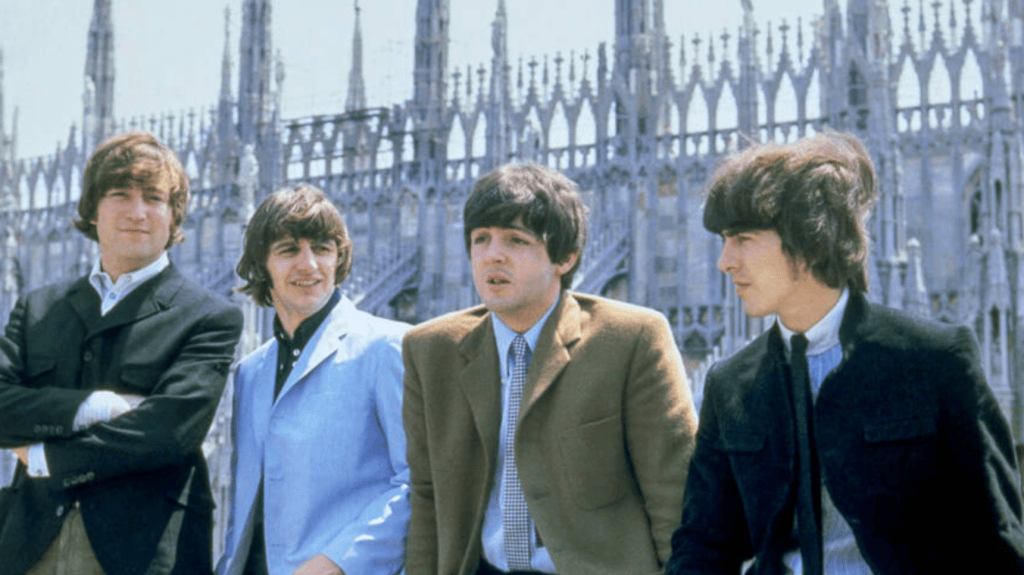
We take for granted just how lightning fast the 1960s propelled pop listeners into the future. Most of us have only been ever able to look at that silly, glorious decade through hindsight – we all live in a world where Jimi Hendrix had recorded ‘Purple Haze’, Dylan had gone from acoustic guitar to electric, where Sly & The Family Stone turned soul music on its head, and of course, The Beatles seemingly switched the switch that took us all from black and white to glorious technicolour.
However, with the deluxe edition of ‘Rubber Soul’, we are able to see just how this happened.
If we look back at the Fab Four, ‘Rubber Soul’ is a pivotal album. We all know it, we’ve all spoken about it, and quite clearly, it is a Beatle LP with a difference – it is our first tangible sign that the group were no longer a pop outfit, but rather, spearheading this new genre we now call ‘rock music’.
If we place ourselves in the November of 1965, the last track on the previous Beatles’ album was the rather maligned (in Beatle circles at least), ‘Dizzy Miss Lizzy’ from ‘Help!’.
‘Help!’ wasn’t without its groundbreaking moments, with the title track showing us the existential pleas to come from John Lennon, and his ‘You’ve Got To Hide Your Love Away’ which showed the group still had their ears to the ground, drinking in the folk music emanating from The States, headed up by Bob Dylan. With ‘Ticket To Ride’, we hear the burgeoning folk-rock sound, and a certain drone, pointing the direction to psychedelia which was just around the corner.
Of course, the album also features ‘Yesterday’, which would become one of the signature songs in the Beatle back catalogue, showing McCartney’s deft ability to be doe-eyed and world-weary.
And yet, for the most part, it is a beat record, and the band’s American label – Capitol Records – demanded more material, so the group knocked out a quick rock ‘n’ roll number akin to their Hamburg days, with a Larry Williams cover. A jumble of modern studio techniques and foot-stomping action, it’s serviceable enough, but it sticks out on ‘Help!’ by virtue of sounding like The Beatles of the past, rather than their usual modernity.
What no-one realised – and potentially The Beatles themselves – is that they were about to hit the studio and turn everything on its axis. Post ‘Rubber Soul’, musicians rather than labels or management were going to signal the future, and from this album onward, you could be a rocker, a folkie, a mixture of the two, an R&B combo, and otherworldly.
Here, the group could talk about things personal to them – Lennon’s ‘In My Life’ shows a maturity far beyond the years of his early twenties, ‘Nowhere Man’ was an opaque track which whispered to the counterculture, while ‘The Word’ yelled to it directly.
Suddenly, the bass lines were hotter, the production more avant garde, and somehow, still mixed in with the group’s ineffable pop spirit. ‘Drive My Car’ was dancefloor dynamite, and yet this was an album that featured ‘Girl’ and ‘Michelle’, which feel more like they were influenced by European arthouse cinema than the current Top 40.
The modal drones in George Harrison’s songs were signposts to the psychedelic rock to come, and with alternate versions of now familiar songs, we hear how strange they are anew, such at the second version of the transcendent ‘Norwegian Wood’.
Alongside the album, as ever, were the singles. ‘Day Tripper’ and ‘We Can Work It Out’ showcased a richer palate of sound than previous work, as the group now freed from the shackles of touring, were able to broaden their sonic horizons and reshape what it meant to record a pop song.
It is strange to think that these mugging, witty, silly boys who made all the girls and boys scream at the top of their lungs, could move into such refined air. The sophistication of the music is at times overt, while other times subtle – but look at the biggest sellers of 1965, Ken Dodd appears with ‘Tears’ and Elvis was ‘Crying In The Chapel’. The Hollies excellent ‘I’m Alive’ was a hit that year, but it appears that The Beatles were more concerned with the towering melodrama of the Walker Brothers, The Byrds, and the raft of killer Motown and Stax records beaming over from The States. Not to mention a certain Bob Dylan, who showed the group there was more to their imaginations than simply singing about girls.
With that, for all the outtakes, rehearsals and instrumentals that feature on the deluxe ‘Rubber Soul’ set, arguably the most fascinating track is one that they ended up throwing away – ‘Little Girl’.
This Lennon home demo is a tender, acoustic number and features the lyrics: “Little girl, I’ve come to say, that this has been a lovely day – I love you.” An easy lyric, that absolutely would have made the cut on previous outings. However, look at these words in comparison to the closing section of ‘Girl’, where you find Lennon singing “was she told when she was young that pain would lead to pleasure? Did she understand it when they said; that a man must break his back to earn his day of leisure? Will she still believe it when he’s dead?”
By this time, the group had no time for throwing any old song out to keep the labels happy. And yet, having been given some awards by Queen Elizabeth II, and having taken a small amount of time off, they were by the late stages of 1965, aware that they owed an album to the suits by Christmas.
The manage to change the course of music in a four week period between October and November of that year. Absolutely astonishing work by anyone’s metric. And even down to the album cover, the psychedelic lettering of the title was oft-aped, but much more interesting is the fact that it doesn’t even feature the band’s name – it was a statement of intent – The Beatles were so influential and famous that they didn’t even need to write their name on it.
The album, experimental and forward thinking as it was, went on a 59-week run in the US charts and sold 1.2 million copies within nine days of its release. From this point onward, there was no turning back to being those loveable Scousers, shaking their mop tops.
And it’s during the couple of minutes of ‘Little Girl’ and its subsequent casting aside, that you feel the tides of popular culture changing. In one short demo recording, The Beatles’ decision making showed what was about to come next, and with ‘Revolver’, they cemented their place as the best and most innovative rock group that would ever live.


Leave a Reply